The great story of the Soviet 'James Bond' may now be traced through the streets of the European capital.
YOVKA DIMITROVA
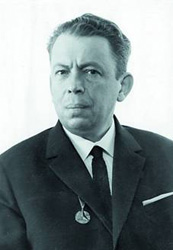 Standard Fuhrer of the SS (Gestapo), Max Otto von Stirlitz, the 'Soviet James Bond' began his career in Brussels. More precisely, one of the prototypes of the Agent of the pentacle, the only one who is alive today - Anatoly Gurevich. The spy with the nickname 'Kent' reached the rise and fall of his life exactly in the European capital.
70 years after the intelligence network "Red Orchestra", which the Russians created at the beginning of the World War II, there are few traces left in Brussels, but they are still enough for a one-day trip. 'After the footsteps of Stirlitz' can be written on the brass plate at the entrance of the building that was serving as a secret headquarters of the 101 Atrebat St., where the cipher codes to the Centre were sent, and passing by the house inhabited by the chief Moscowian resident in Belgium on 106 Bacon Avenue, and walking on the street leading to the Royal Palace where at number 192 was housed his extremely profitable business with the German army suppliers.
Like Ian Fleming, the Soviet writer Julian Simeonov created a series for the elusive Soviet spy Stirlitz, but he did not enter the Russian folklore until the premiere of the show 'Seventeen moments of spring'. In the confessions of his literary 'father', Stirlitz is a collective image of a Soviet spy behind the German lines. Today on the Internet one can find more jokes about Stirlitz, and good ones, but years ago his literary exploits filled many states of intelligence in the Eastern block.
Standard Fuhrer of the SS (Gestapo), Max Otto von Stirlitz, the 'Soviet James Bond' began his career in Brussels. More precisely, one of the prototypes of the Agent of the pentacle, the only one who is alive today - Anatoly Gurevich. The spy with the nickname 'Kent' reached the rise and fall of his life exactly in the European capital.
70 years after the intelligence network "Red Orchestra", which the Russians created at the beginning of the World War II, there are few traces left in Brussels, but they are still enough for a one-day trip. 'After the footsteps of Stirlitz' can be written on the brass plate at the entrance of the building that was serving as a secret headquarters of the 101 Atrebat St., where the cipher codes to the Centre were sent, and passing by the house inhabited by the chief Moscowian resident in Belgium on 106 Bacon Avenue, and walking on the street leading to the Royal Palace where at number 192 was housed his extremely profitable business with the German army suppliers.
Like Ian Fleming, the Soviet writer Julian Simeonov created a series for the elusive Soviet spy Stirlitz, but he did not enter the Russian folklore until the premiere of the show 'Seventeen moments of spring'. In the confessions of his literary 'father', Stirlitz is a collective image of a Soviet spy behind the German lines. Today on the Internet one can find more jokes about Stirlitz, and good ones, but years ago his literary exploits filled many states of intelligence in the Eastern block.
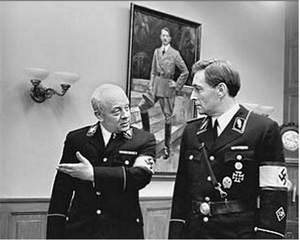 Gurevich's great career started from Brussels, where he was sent in the late 30's to legitimize himself as a wealthy Uruguayan heir under the name Vincent Sierra who had to be inculcated in Sweden. At that time the Soviet population in Belgium dealt entirely with replacement of fake spy identities. But by the very getting off the train, Kent made his first mistake - he gave the taxi driver the address of a brothel instead of this of his hotel,though he did not see this as a bad sign for the future. With the start of the war, the instructions from the Centre changed and Kent was called a suppporter of the president Leopold Trepper. So as to enter his new role, Sierra enrolled for a school for young rich people, in which he was taught some manners, and went into the Belgian aristocratic circles. He was accommodated in a wealthy neighbourhood but not in the centre, close to the largest Brussels barracks, and began to establish acquaintances. One of them is with a millionaire neighbour, the Czech Singer.
Like most Soviet agents from that period, Kent has a Latin American legend. He is recruited by the intelligence as a volunteer from the Spanish Civil War. He speaks the language fluently, and his American origin is an excuse for his accent in French, German and English, which he could also speak. Vincente Sierra is sociable, charming, cheerful and generous, and soon becomes a womanizer. One of those he hypnotises with his charm is the daughter of the millionaire neighbour Margaret Bartcha.
Soon before the occupation of Belgium, Singer, just like thousands of Jews leaves Europe, but Margaret refuses to go with her family. As she says - not to be seperated from the grave of her recently died husband. She convinces her father to leave her to the custody of the 27-year-old Sierra and to give him part of his business contacts. With the customers Kent receives, he eastablishes his trade company 'Simex Co.', opening his office on the street leading to the royal palace 'Royal'. The company is so profitable that when the German army enters Belgium in 1940 and Kent takes care of the the Soviet population, the company covers all his expenditures. The net profit of the suppliers of the Wehrmacht is 1.6 million francs per year, and soon they open branches in various European countries.
The company is a convenient cover for Kent to gain information about the plans of the Wehrmacht. When he receives an order for half a million of aluminum spoons he learns that Hitler plans a campaign in the East, but will need appliances for new camps. What's more, the supply of thin cloth rolls is regarded in Moscow as a sign of a forthcoming offensive in Africa.
After his wedding with Margaret, who is present in his reports under the pseudonym 'Blonde', the couple turns to the highlife. Their parties are well discussed along Brussels. Agent Kent's contacts with the Belgian elite and German officers are so strong that he gets a free movement pass, allowing him to execute missions in the whole Europe, including the Netherlands, the Czech Republic and within the Third Reich.
In late 1941, Moscow sends him to gather information why both intelligence groups in Berlin have stopped to share information with the Centre. He meets their bosses, gives them a new code and returns with the collected information, including valuable information about the losses of German aircraft, about the preparations of the offensive towards the Caucasus, about the upcoming siege of Leningrad, and about the crushing of the British agents in the Balkans. He receives the personal gratitude of Stalin fot this.
The data is so much that the radio station at Atrebat St. transmits 5 hours a day and is eventually detected by course-and-bearing-indicators. Gestapo reaches the headquarters by firstly turning off the electricity of the districts of Brussels. The radio operator are arrested. Due to sloppiness some of the radiogramms, ciphers and codes fall in German hands and the Russian Morse code is well read. The network in Belgium is crushed. Kent and his wife flee to Marseille, but in November 1942 they are captured.
The Soviet spy convoyed in Berlin, where he is being examined personally by the head of the Gestapo general Henry Muller. He offers him in exchange for his life to become part of the radio game that the Germans begin with Moscow, giving them wrong info with the translated code. Kent tries to warn his allies by changing the style of the messages and the information processing. According to some, in the Center they get this, and according to others - they don't. However, after the failure in Brussels - the biggest one in the Soviet intelligence during the whole war,129 Soviet spies are arrested in Berlin (some of them are high-ranked German officers), 47 of them are beheaded or hanged. More than 100 agents are exposed in Belgium, France and the Netherlands. 12 radio stations cease their transmissions and this is the end of the illegal anti-fascist groups associated with Soviet intelligence, and known as 'The Red Orchestra'.
Kent is transferred to a prison in Paris, where he continues to transmit the messages being given to him by the Gestapo. As part of the deal he receives a visit from his wife. During the visit, he confesses to her that he is a Soviet agent without telling her his name. After 9 months their son Michel is born.
The cat-and-mouse chase game between Berlin and Moscow continues until February 1945. The end of the war is nigh and Kent, been moved back to Germany, is able to enrol the head of the 'Sonderkommand', which is said to have been in charge of fighting the Soviet radio operators, Heinz Panvits to go to the Soviet side. Altogether with Panvits's secretary, a radio operator and part of Gestapo's archives, the four escape from the prison in Berlin and by car, passing through the Alps, arrive in Paris. In June the entire company returns to Moscow where they are arrested and convicted for treason. Trepper, the former Soviet resident, is convinced that Kent has spoiled the residentship and has helped the Gestapo. Gurevich is sentenced to 20 years for treason and is sent to Siberia. In 1955, after Stalin's death, he is granted an amnesty and he returns to Leningrad. Travelling home in the train, he meets the engineer Lida Kruglova. A week before the wedding, it appears that he is released by mistake and is then returned back to the Gulag. But Lida is so in love that she follows him in the camp. Five years later he is freed, the two marry and go back near Neva. His first wife, Margaret, who survives miraculously, has not stopped looking for him after the war, writing to Soviet embassies in Europe, but has not received an answered until her death in 1985. Gurevich is free, but is not vandicated until 1991. At the end of the 'Perestroika' in Russia, one of the books on the story of "The Red Orchestra" is released in France. Michelle contacts the author Gilles Perrault and with his help she manages to find her father 45 years after they last saw each other, they meet again but Gurevich refuses to move to Spain with his son, and lives today in St. Petersburg, in anticipation of his 95th birthday.
Gurevich's great career started from Brussels, where he was sent in the late 30's to legitimize himself as a wealthy Uruguayan heir under the name Vincent Sierra who had to be inculcated in Sweden. At that time the Soviet population in Belgium dealt entirely with replacement of fake spy identities. But by the very getting off the train, Kent made his first mistake - he gave the taxi driver the address of a brothel instead of this of his hotel,though he did not see this as a bad sign for the future. With the start of the war, the instructions from the Centre changed and Kent was called a suppporter of the president Leopold Trepper. So as to enter his new role, Sierra enrolled for a school for young rich people, in which he was taught some manners, and went into the Belgian aristocratic circles. He was accommodated in a wealthy neighbourhood but not in the centre, close to the largest Brussels barracks, and began to establish acquaintances. One of them is with a millionaire neighbour, the Czech Singer.
Like most Soviet agents from that period, Kent has a Latin American legend. He is recruited by the intelligence as a volunteer from the Spanish Civil War. He speaks the language fluently, and his American origin is an excuse for his accent in French, German and English, which he could also speak. Vincente Sierra is sociable, charming, cheerful and generous, and soon becomes a womanizer. One of those he hypnotises with his charm is the daughter of the millionaire neighbour Margaret Bartcha.
Soon before the occupation of Belgium, Singer, just like thousands of Jews leaves Europe, but Margaret refuses to go with her family. As she says - not to be seperated from the grave of her recently died husband. She convinces her father to leave her to the custody of the 27-year-old Sierra and to give him part of his business contacts. With the customers Kent receives, he eastablishes his trade company 'Simex Co.', opening his office on the street leading to the royal palace 'Royal'. The company is so profitable that when the German army enters Belgium in 1940 and Kent takes care of the the Soviet population, the company covers all his expenditures. The net profit of the suppliers of the Wehrmacht is 1.6 million francs per year, and soon they open branches in various European countries.
The company is a convenient cover for Kent to gain information about the plans of the Wehrmacht. When he receives an order for half a million of aluminum spoons he learns that Hitler plans a campaign in the East, but will need appliances for new camps. What's more, the supply of thin cloth rolls is regarded in Moscow as a sign of a forthcoming offensive in Africa.
After his wedding with Margaret, who is present in his reports under the pseudonym 'Blonde', the couple turns to the highlife. Their parties are well discussed along Brussels. Agent Kent's contacts with the Belgian elite and German officers are so strong that he gets a free movement pass, allowing him to execute missions in the whole Europe, including the Netherlands, the Czech Republic and within the Third Reich.
In late 1941, Moscow sends him to gather information why both intelligence groups in Berlin have stopped to share information with the Centre. He meets their bosses, gives them a new code and returns with the collected information, including valuable information about the losses of German aircraft, about the preparations of the offensive towards the Caucasus, about the upcoming siege of Leningrad, and about the crushing of the British agents in the Balkans. He receives the personal gratitude of Stalin fot this.
The data is so much that the radio station at Atrebat St. transmits 5 hours a day and is eventually detected by course-and-bearing-indicators. Gestapo reaches the headquarters by firstly turning off the electricity of the districts of Brussels. The radio operator are arrested. Due to sloppiness some of the radiogramms, ciphers and codes fall in German hands and the Russian Morse code is well read. The network in Belgium is crushed. Kent and his wife flee to Marseille, but in November 1942 they are captured.
The Soviet spy convoyed in Berlin, where he is being examined personally by the head of the Gestapo general Henry Muller. He offers him in exchange for his life to become part of the radio game that the Germans begin with Moscow, giving them wrong info with the translated code. Kent tries to warn his allies by changing the style of the messages and the information processing. According to some, in the Center they get this, and according to others - they don't. However, after the failure in Brussels - the biggest one in the Soviet intelligence during the whole war,129 Soviet spies are arrested in Berlin (some of them are high-ranked German officers), 47 of them are beheaded or hanged. More than 100 agents are exposed in Belgium, France and the Netherlands. 12 radio stations cease their transmissions and this is the end of the illegal anti-fascist groups associated with Soviet intelligence, and known as 'The Red Orchestra'.
Kent is transferred to a prison in Paris, where he continues to transmit the messages being given to him by the Gestapo. As part of the deal he receives a visit from his wife. During the visit, he confesses to her that he is a Soviet agent without telling her his name. After 9 months their son Michel is born.
The cat-and-mouse chase game between Berlin and Moscow continues until February 1945. The end of the war is nigh and Kent, been moved back to Germany, is able to enrol the head of the 'Sonderkommand', which is said to have been in charge of fighting the Soviet radio operators, Heinz Panvits to go to the Soviet side. Altogether with Panvits's secretary, a radio operator and part of Gestapo's archives, the four escape from the prison in Berlin and by car, passing through the Alps, arrive in Paris. In June the entire company returns to Moscow where they are arrested and convicted for treason. Trepper, the former Soviet resident, is convinced that Kent has spoiled the residentship and has helped the Gestapo. Gurevich is sentenced to 20 years for treason and is sent to Siberia. In 1955, after Stalin's death, he is granted an amnesty and he returns to Leningrad. Travelling home in the train, he meets the engineer Lida Kruglova. A week before the wedding, it appears that he is released by mistake and is then returned back to the Gulag. But Lida is so in love that she follows him in the camp. Five years later he is freed, the two marry and go back near Neva. His first wife, Margaret, who survives miraculously, has not stopped looking for him after the war, writing to Soviet embassies in Europe, but has not received an answered until her death in 1985. Gurevich is free, but is not vandicated until 1991. At the end of the 'Perestroika' in Russia, one of the books on the story of "The Red Orchestra" is released in France. Michelle contacts the author Gilles Perrault and with his help she manages to find her father 45 years after they last saw each other, they meet again but Gurevich refuses to move to Spain with his son, and lives today in St. Petersburg, in anticipation of his 95th birthday.